About Me

Hi, I’m Kiran.

I grew up between multiple worlds.
Indian roots, born in Thailand, schooled in English – and I’ve lived in Australia for most of my adult life, with stints in Ecuador, Japan, and Canada along the way.

Home has always felt a bit abstract. I’ve never quite belonged anywhere in the traditional sense – and somewhere along the way, I stopped feeling the need to.

That’s shaped how I work.

I’m comfortable sitting with people who feel like outsiders in their own lives – people who don’t quite fit the mould, who’ve tried the standard approach and found it lacking, or who carry a quiet sense of not quite fitting in anywhere.

That’s not a clinical skill. That’s lived experience.

Professionally, I’ve spent over a decade across clinical, community, and frontline mental health – including individual therapy, crisis support, group work, and adventure-based programs with young people and refugee communities.

Across all of it, the same thread kept showing up:
I’m less interested in getting through a checklist, and more interested in what actually makes people tick – and what helps them start to believe in themselves again.

That’s what led me to private practice.

Public systems are often built for throughput.
I’m built for depth.

I’m also someone who shows up to things I’m not naturally good at – surfing, snowboarding, skydiving – things that push me out of my comfort zone. Not because I’m good at them, but because I know what it feels like to do something so scary that you think you can’t – and then feel something shift, quietly, from the inside.

And honestly? Most therapy doesn’t need to look that dramatic.

Sometimes it’s a walk.
Sometimes it’s sitting and talking.
Sometimes it’s making something, doing art, moving, or trying something different.

We figure out what actually helps, and that can change over time.

There’s no set path, and nothing you have to be before you show up.

That’s the thread running through everything I do:

Therapy that adapts to you – how your brain works, how you process things, and what actually resonates.

Because that’s where real change tends to happen.

Whatever brought you here – whether you can name it or not – you don’t need to have it figured out to begin.

Kiran, Accredited Mental Health Social Worker offering outdoor and online therapy on the Gold Coast

Who I work with

You don’t need a diagnosis or a clear explanation of what’s wrong.

Most people come because something doesn’t feel right – and they’re ready for that to change.

I work with young people (14+) and adults who:

  • feel overwhelmed, stuck, or not quite themselves
  • have tried to “figure it out” but keep hitting the same patterns
  • think differently (including ADHD) and haven’t always felt understood
  • are navigating burnout, big life changes, or the aftermath of difficult experiences
  • feel the pressure of expectations – cultural, family, or internal

You don’t need to have the right words for it yet.
You just need a place to start.

If you’re a parent looking for support for your young person, you’re in the right place too. I work directly with young people and can start with an initial conversation with you if that feels helpful.
How We Work Together

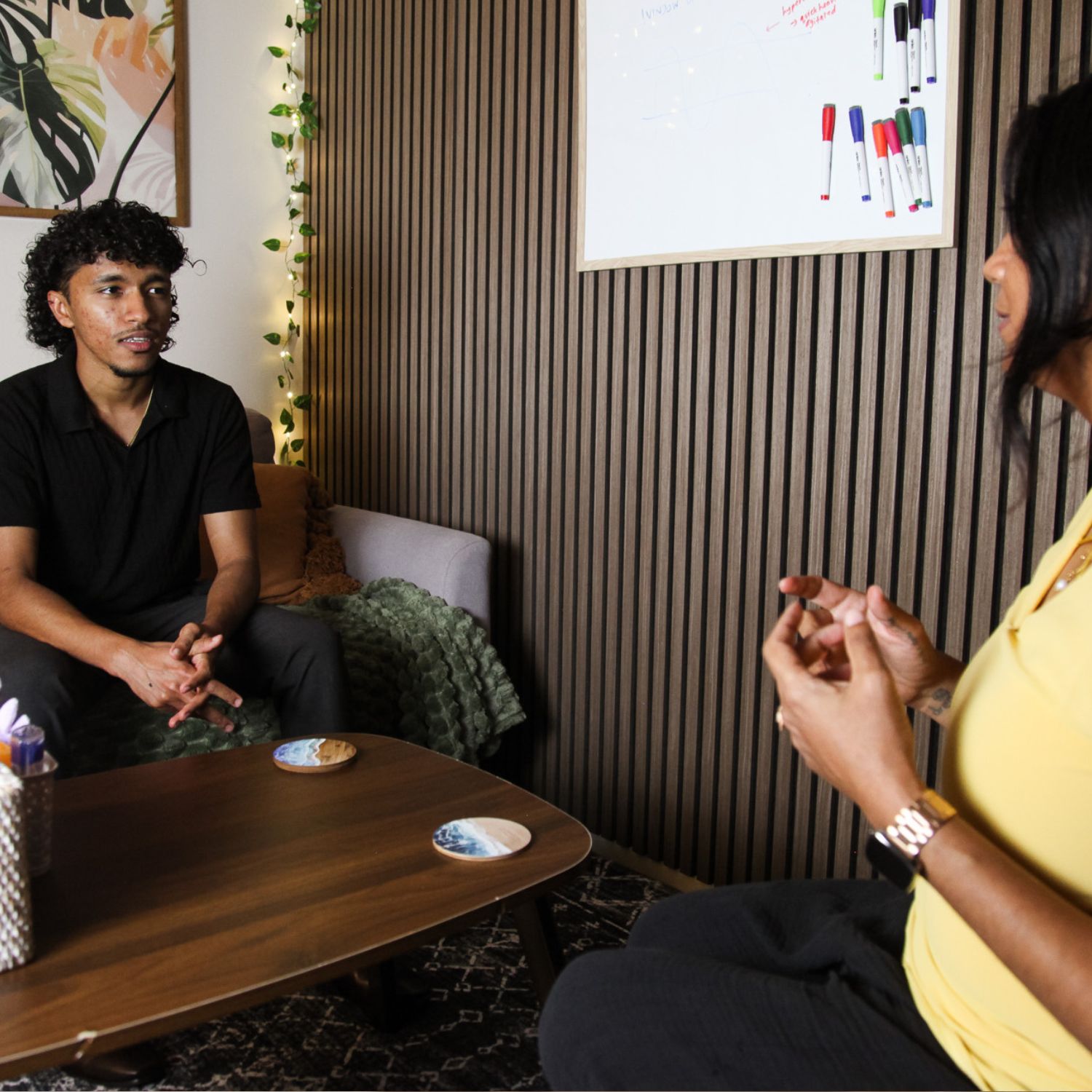
There’s no standard template here. Every session is shaped around you – what you’re carrying, how you think, how you express yourself, and what actually resonates.

Depending on what’s useful, sessions might involve:

  • Straightforward conversation – sometimes that’s exactly what’s needed
  • Walking or movement – outdoors in the parklands around Varsity Lakes
  • Creative or art-based approaches
  • Body-based and grounding strategies to settle your nervous system
  • Practical tools you can actually use between sessions

We move at your pace.

Training & Approach 

My work is grounded in evidence-based approaches, including Acceptance and Commitment Therapy (ACT), Cognitive Behaviour Therapy (CBT), DBT-informed strategies, somatic approaches and strengths-based practice. Rather than applying a single model, I draw across these depending on what’s most useful for each person.

I hold a specialist clinical interest in ADHD – supporting people who are newly diagnosed, long suspected, or finally making sense of a lifetime of feeling different. I am a member of the Australian ADHD Professionals Association (AADPA) and stay current with best-practice approaches to ADHD support across the lifespan.

For referrers: I accept referrals under Medicare’s Better Access initiative, WorkCover Queensland, DVA, Victims Assist QLD and NDIS (self and plan managed). I am happy to provide written progress reports and case coordination as needed.

Fees & Rebates

50-minute telehealth (online) session: $200
Medicare rebate: $87.25
Out-of-pocket: $112.75

50-minute face-to-face session: $225
Medicare rebate: $112.40
Out-of-pocket: $112.60

Face-to-face sessions are held in Varsity Lakes, with outdoor sessions available in the surrounding parklands and natural areas nearby. Telehealth sessions are delivered via video call and are available Australia-wide.

How Medicare rebates work

If you have a current Mental Health Treatment Plan (MHTP) and referral from your GP (or a psychiatrist/paediatrician), you can claim a Medicare rebate for up to 10 sessions per calendar year under the Better Access initiative.

Your referral does not have to be addressed to me specifically – as long as it is valid, you can use it with any therapist who holds a Medicare provider number.

If you’re unsure how to arrange an MHTP, I’m happy to guide you – it’s often a quick chat with your GP.

Rebates are processed through Medicare after your session.

Other funding options accepted

  • NDIS — self-managed and plan-managed participants welcome. Please get in touch to discuss your plan before booking.
  • DVA — mental health referrals accepted.
  • Victim Assist QLD — approved provider.
  • WorkCover QLD — referrals accepted.
  • Private health insurance — some funds offer rebates for social work services. Coverage varies — check directly with your fund. Note: you cannot claim both a Medicare rebate and a private health rebate for the same session.

No referral needed

You’re very welcome to see me privately without a GP referral – your sessions simply won’t attract a Medicare rebate.

FAQ

I offer an optional free 15-minute intro call before we begin. It’s a chance to ask questions, get a feel for my approach, and see whether working together feels like the right fit.

We’ll briefly talk about what’s bringing you here and what kind of support you’re looking for. I’ll also explain how sessions can work – so you can choose what feels most comfortable.

Therapy works best when it feels safe and collaborative. You don’t need to have everything figured out – just a willingness to start where you are, and we’ll take it step by step.

The first session is a space to slow things down and get a clearer picture of what’s going on for you.

We’ll talk about what’s brought you here, what you’re navigating right now, and what kind of support feels most helpful. There’s no pressure to share everything or have the “right words” – we go at your pace.

The focus is on helping you feel safe and understood, and on gently shaping how we’ll work together moving forward.

There’s no fixed number – everyone’s needs are different.

Some people come for a few sessions to gain clarity, support, or practical tools around a specific issue. Others choose ongoing sessions to work through deeper patterns, transitions, or longer-term challenges.

We’ll check in along the way and decide together what feels helpful. There’s no pressure to commit to a set timeline – therapy here is guided by what you need.

Experiential therapy is an evidence-based approach that focuses on learning and processing through experience – not just talking.

Rather than sitting face-to-face for the entire session, experiential therapy can include movement, time in nature, creative activities, or practical exercises that support regulation, insight, and emotional processing. Conversation is still an important part of the work – it just isn’t the only tool used.

Many people find this approach helpful when:

  • Talking alone feels overwhelming or limiting

  • Sitting still or staying engaged is difficult

  • They feel anxious, shut down, or disconnected in clinical settings

  • They make more sense of things through doing, noticing, or experiencing

At Wild Ground Therapy, experiential and outdoor approaches are used thoughtfully alongside evidence-based talk therapy. Sessions are tailored to the individual – some are more reflective, some more movement-based, and many are a mix of both.

The aim is the same as traditional therapy: to support understanding, regulation, and meaningful change – just through a way of working that feels more accessible and grounded for some people.

Face-to-face sessions are offered at the Varsity Lakes Community Resource Centre – a spot I chose deliberately because it sits right on the edge of parklands.

Depending on what feels right on the day, we might take a walk, sit outside on the grass, or use the clinic space inside. There’s no fixed format. Sometimes the most useful thing is movement. Sometimes it’s sitting still. We figure that out together.

Sessions can involve walking and talking, grounding or mindfulness practices, creative or body-based approaches, or straightforward conversation. What we do tends to shift over time as you do – and that’s kind of the point.

Yes – confidentiality still applies to outdoor sessions.

If we happen to encounter someone you know, your privacy is always prioritised. We’ll follow a pre-agreed plan – whether that means pausing, changing direction, or shifting the conversation as needed.

Yes.

I regularly support young people (14+) and adults experiencing anxiety, trauma, ADHD and neurodivergence, overwhelm, identity concerns, cultural or family pressures, and major life transitions.

Support is always tailored to your needs, using approaches that prioritise regulation, engagement, and meaningful change.

Please note that I do not offer any diagnosis.

Yes – I welcome self-managed and plan-managed NDIS participants. I am not a registered NDIS provider, so I’m unable to support agency-managed plans.

If you’re unsure whether your plan covers therapy with an Accredited Mental Health Social Worker, it’s worth checking with your support coordinator or plan manager before booking. Feel free to get in touch if you have questions.

In addition to private payments, I accept a range of funding options:

  • Medicare Mental Health Treatment Plan (MHTP) from your GP, you can claim rebates for up to 10 sessions per calendar year
  • NDIS — self-managed and plan-managed participants welcome
  • DVA — mental health referrals accepted
  • Victim Assist QLD — approved provider
  • WorkCover QLD — referrals accepted
  • Private health insurance — some funds offer rebates for social work services. Check directly with your fund as coverage varies

No referral is needed to see me privately – your sessions simply won’t attract a Medicare rebate.

If you’re unsure which funding option applies to you, feel free to get in touch before booking.

Yes – I work with young people aged 14 and over, as long as they’re engaging in therapy by choice.

For those under 18, parent or caregiver consent is required before we begin. I’ll usually have a brief conversation with the parent or caregiver first to talk through the process, and from there sessions are guided by the young person’s needs, pace, and best interests.

If you’re a parent wondering whether this might be right for your teenager, the free intro call is a good place to start – you’re welcome to join that call yourself or attend the call on behalf of your child.

An Accredited Mental Health Social Worker (AMHSW) is a qualified social worker who has completed advanced postgraduate training and demonstrated expertise in mental health assessment and therapeutic support.

AMHSWs are accredited through the Australian Association of Social Workers (AASW) and are recognised by Medicare as specialist mental health clinicians.

In practice, this means I can provide evidence-based mental health therapy under the Better Access initiative, and you may be eligible to claim Medicare rebates with a valid Mental Health Treatment Plan.

Accreditation also requires meeting strict professional, ethical, and ongoing training standards.

No – you’re welcome to see me privately without a referral.

A Mental Health Treatment Plan (MHTP) from your GP (or a psychiatrist/paediatrician) simply allows you to access Medicare rebates for up to 10 sessions per calendar year.

If you’re unsure whether an MHTP is right for you, I’m happy to talk it through.

Yes.

Your referral does not need to be addressed to me specifically. As long as it’s valid and current, you can use it with any eligible Medicare provider, including an Accredited Mental Health Social Worker or psychologist.

If you have a current Mental Health Treatment Plan (MHTP) and referral from your GP (or a psychiatrist/paediatrician), you may be eligible for Medicare rebates under the Better Access initiative.

Your referral does not need to be addressed to me specifically – as long as it’s valid, it can be used with any eligible provider.

Full session fees and rebate amounts are outlined in the Fees & Rebates section above.

I ask for at least 24 hours’ notice if you need to cancel or reschedule a session.

Cancellations within 24 hours are charged at the full session fee, as that time is reserved specifically for you. If something unexpected or unavoidable comes up, please get in touch as soon as possible.

You can book a session directly using the button below.

If you’re unsure whether this approach is the right fit, you’re also welcome to Book a Free Intro Call. This is an optional space to ask questions and talk things through before getting started.

Contact

Ready to get started?

The easiest first step is a free 15-minute intro call — a no-pressure conversation where you can ask questions, get a feel for how I work, and decide if it feels like the right fit. There’s nothing to prepare.

Already know you’d like to book a session? You can book directly below — no referral needed, though a Mental Health Treatment Plan through your GP allows you to claim Medicare rebates.

Have a quick question? Check the FAQ above — it covers most things. If you can’t find what you’re looking for, email kiran@wildgroundtherapy.com.au and I’ll get back to you within 1–2 business days.

A gentle note – If you’re experiencing a mental health emergency or need immediate support, please contact 000, Lifeline (13 11 14), or your local emergency service.